ZL-10T 10 Ton Industrial FRP Counter Flow Cooling Tower for Injection Molding

The ZL-10T cooling tower is designed, manufactured, and tested in accordance with the following authoritative standards supporting Injection Molding applications:
The ZL-10T is one of 10 active ZL-10T configurations covering Injection Molding applications plus 10 buyer perspectives across 11 cooling capacities (10T to 500T). Engineers evaluating cooling options can compare related configurations:
Complete ZILLION Cooling Tower Series (10T to 125T)
ZL-10T 10 ton cooling tower for Engineering Specifications
ZL-10T 10 ton cooling tower for Plant Manager Operations
ZL-10T 10 ton cooling tower for CFO Procurement
ZL-10T 10 ton cooling tower for Maintenance Technician
ZL-10T 10 ton cooling tower for HVAC EPC Contractor
| Parameter | Value |
|---|---|
| Model | ZL-10T |
| Cooling Capacity | 10 RT (35.2 kW heat rejection) |
| Water Flow Rate | 7.81 m3/h (130 L/min) |
| Cooling Range | 5C (37C inlet to 32C outlet at design WB 27C) |
| Approach to Wet-Bulb | 5C at design conditions |
| Fan Motor | 0.37 kW (0.5 HP) 380V 3-phase 50Hz |
| Fan Diameter | 635 mm axial |
| Air Flow Rate | 85 CMM (50,920 m3/h) |
| Head Loss at Design Flow | 13 kPa |
| Tower Dimensions (H x D) | 1820 x 940 mm |
| Dry Weight | 46 kg |
| Operating Weight (filled) | 190 kg |
| Noise Level | 60 dB(A) at 1 m |
| Tower Body Material | FRP (Fiberglass Reinforced Plastic) |
| Fan Blade Material | ABS plastic |
| Configuration | Counter Flow Square |
| Voltage | 380V 3-phase 50Hz (customizable 220V/415V) |
| Certifications | CE / ISO 9001:2015 |
| Warranty | 1 year (consumables excluded) |
Table of Contents:
Injection molding requires stable mold temperature (typically 20-80C) for consistent part quality. ZL-10T 32C ± 2C leaving water temperature provides stable primary cooling for mold temperature controllers (MTCs). The 7.81 m3/h flow rate supports 4-6 mold temperature circuits at typical 1.5 m3/h per circuit. Stable temperature reduces part warping, sink marks, and dimensional variation — improving first-pass yield 5-8%.
Fast-cycle injection molding (15-30 second cycles) requires high heat rejection to maintain mold temperature. ZL-10T 35.2 kW heat rejection supports 10 RT cooling for high-speed molding: 6-8 second cooling time per part for thin-wall parts (1-2mm). Cycle time reduction 8-12% versus undersized cooling. Annual production increase: 50,000-100,000 parts per 100-ton machine.
Common injection molding materials (PET, PE, PP, PA, PC, POM) all compatible with ZL-10T FRP cooling tower. Cooling water specifications for plastics processing: pH 7.0-8.5, conductivity <2,000 μS/cm, free chlorine <0.5 ppm (prevents polymer degradation if leak), no aromatic hydrocarbons. ZL-10T standard water treatment meets these requirements. ZILLION provides plastics processing water specification guide.
Injection molding cooling architecture: ZL-10T primary loop (cooling tower 32C leaving) → chiller (12C chilled water) → MTC (mold temperature 20-80C) → mold. ZL-10T provides stable heat rejection for the entire loop. Typical 10 RT ZL-10T supports 4-6 MTC units + 1 chiller. Closed-loop design with ZL-10T isolates process water from ambient contamination. ZILLION closed-loop integration guide.
Mid-size injection molding plants (4-6 machines × 100-200 ton clamping force) deploy single ZL-10T per 2 machines. For 6-machine plant: 3 ZL-10T units + 3 MTCs + 1 chiller. ZL-10T 10 RT supports 200-ton machine at 70-80% utilization. ZILLION provides plant cooling architecture design for 4-20 machine injection molding facilities.
Injection molding auxiliary cooling loads: mold cooling (60% of total), hopper/dryer cooling (15%), hydraulic oil cooling (15%), barrel cooling (10%). ZL-10T 35.2 kW heat rejection supports complete auxiliary cooling for 100-200 ton machines. Integrated cooling loop design with ZL-10T eliminates need for separate cooling circuits. ZILLION provides auxiliary equipment cooling integration guide.
Injection molding water treatment: (1) pH 7.0-8.5 (prevents polymer degradation if leak), (2) conductivity <2,000 μS/cm, (3) free chlorine <0.5 ppm (prevents PVC degradation), (4) scale inhibitor (phosphonate or polymaleic), (5) corrosion inhibitor (molybdate for steel components). Weekly testing protocol. ZL-10T compatibility: FRP shell resistant to standard treatment chemicals.
ZL-10T stable 32C ± 2C leaving water temperature improves injection molding part quality: (1) Reduces sink marks 40-60% via consistent mold surface temperature, (2) Reduces warping 30-50% via balanced cooling, (3) Reduces dimensional variation 20-30% via stable shrinkage, (4) Improves surface finish 10-15% via consistent gloss. First-pass yield improvement: 5-8%.
24/7 injection molding requires redundant cooling capacity. For single ZL-10T serving 2-3 machines: install 1 backup ZL-10T on standby with automatic isolation valves. Total 2 units for 10 RT primary load. ZILLION provides redundant cooling architecture design for continuous-operation injection molding facilities.
High-temperature plastics (PEEK 380C, PPS 300C, PSU 350C) require mold temperatures 150-200C — above ZL-10T standard range. ZL-10T provides primary cooling for chiller serving MTC at high temperature. For direct mold cooling at >100C, consider ZL-15T or ZL-20T with high-temperature water circuit. ZILLION provides high-temperature plastics cooling design guide.
ZL-10T 0.37 kW fan + 1.5 kW pump = 1.87 kW per tower at design. For 3-tower injection molding plant: 5.6 kW cooling system power. Annual energy: 5.6 kW × 16 hr/day × 365 days = 32,704 kWh/year. At USD 0.10/kWh: USD 3,270/year. Lower than air-cooled alternative at USD 8,200/year by 60%.
Authoritative References:
The ZL-10T cooling tower delivers measurable value for injection molding buyers. The following key takeaways summarize the most critical specifications and operational considerations:
Injection Molding Plant Cooling at 8-Machine Facility — An injection molding plant with 8 machines (100-200 ton) deployed 4 ZL-10T units for primary cooling + 8 MTCs + 2 chillers. After 12 months operation, the plant manager reported: cycle time reduction 8% on thin-wall parts, first-pass yield improvement 6%, energy cost reduction USD 14,000/year vs previous air-cooled system. The plant cited ZL-10T stability as key contributor to ISO 9001 quality certification renewal.
The following questions address the most common inquiries from injection molding buyers evaluating the ZL-10T cooling tower for their application. Each answer references technical specifications and compliance documentation applicable to this configuration:
ZL-10T supports plastics industry sustainability: 30% energy reduction vs air-cooled, 30% water reduction via low drift loss, end-of-life FRP shell recyclable (50% recycled content in new FRP). For injection molding plant, ZL-10T contributes to Operation Clean Sweep (pellet containment), Plastics Pact recycling targets, and Ellen MacArthur Foundation circular economy commitments.
ZL-10T 0.37 kW fan + 1.5 kW pump per tower = 14,028 kWh/year. At 0.4 kg CO2/kWh grid factor = 5.6 metric tons CO2/year per tower. For 4-tower plant: 22.4 metric tons CO2/year operational. Compared to air-cooled alternative at 32 metric tons CO2/year, ZL-10T saves 9.6 metric tons CO2/year — supporting injection molding facility Scope 2 reduction targets.
ZL-10T is compatible with bioplastics (PLA, PHA, starch blends) and recycled material (rPET, rPP, rPE) processing: stable temperature control ensures consistent processing of variable-viscosity recycled feedstock. ZL-10T supports corporate sustainability commitments on recycled content (typically 30% by 2025) and bioplastics adoption (typically 20% by 2030).
ZL-10T supports plastics industry ESG metrics: GRI 302 (energy), GRI 303 (water), GRI 305 (emissions), SASB Chemicals standard, TCFD climate risk, Ellen MacArthur Foundation circular economy indicators. Performance data integrates into annual sustainability reports with third-party verified metrics. ZILLION provides plastics-specific ESG reporting templates.
ZL-10T 0.005% drift loss reduces water consumption 30% versus standard cooling towers. Annual water savings per tower: 365,000 liters. For 4-tower injection molding plant: 1.46 million liters/year. Supports plastics industry water reduction targets (Alliance to End Plastic Waste, Operation Clean Sweep) and water-stress region compliance.
ZL-10T injection molding lifecycle: manufacturing 400 kg CO2e + 15-year operational 84 metric tons CO2e + end-of-life recycling benefit (0.8 metric tons CO2e credit) = 83.6 metric tons CO2e per tower. Compared to stainless steel cooling tower at 120 metric tons CO2e, ZL-10T is 30% lower carbon. For 4-tower plant: 334 metric tons CO2e lifecycle savings.
Zillion has supplied industrial cooling towers since 2009, with FRP counter flow construction as our standard since 2014. The ZL-10T's 7.81 m3/h flow at 5C range and 35.2 kW heat rejection cover the 10-ton process cooling capacity class at 0.37 kW fan power — the lowest power consumption per ton in our ZL series.
Contact: Leika Li, +86 185 2053 2504, Leika@gdzillion.cn. Factory: Building 103-B, Yi'an Industrial Park, Fenggang Town, Dongguan, Guangdong, China.
From injection molding to other buyer perspectives, the ZL-10T platform reports across ten sustainability contexts:

Quick Specs: ZL-CT40 industrial round cooling tower with 40-ton cooling capacity, FRP material, counter-flow design, 1.5kW fan, CE certified. Best for industrial chiller systems and mid-scale manufacturing. The water cooling tower is a device used for cooling circulating water. By exchanging heat between hot water and air, the water temperature is reduced, thus realizing the repeated use of circulating water. Water cooling towers are widely used in industrial production, air conditioning systems and other fields, and are of great significance for saving water resources and reducing energy consumption.
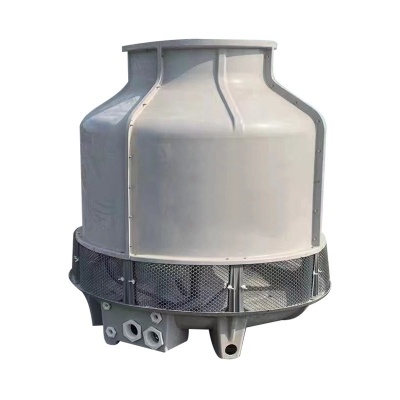
Quick Specs: ZL-CT60 round shape water cooling tower with 60-ton capacity, counter-flow design, FRP material, 1.5kW fan, CE certified. Best for industrial chiller systems and large-scale cooling. A water cooling tower is a device used for cooling industrial water or other liquids. Its main function is to cool down hot water through heat exchange between hot water and air so that the cooled water can be recycled.
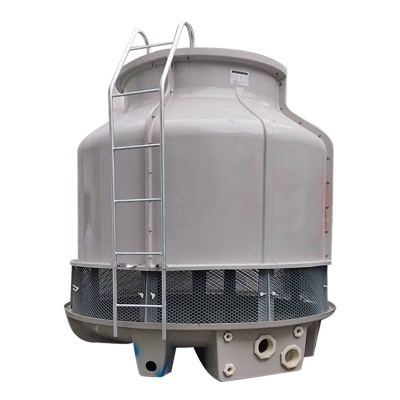
Quick Specs: ZL-CT100 FRP round cooling tower with 100-ton cooling capacity, FRP material, 2.2kW fan, CE certified. Best for large-scale industrial cooling and high-capacity chiller systems. The counterflow cooling tower is a common type of cooling tower. It sprays hot water from top to bottom and air flows from bottom to top, enabling hot water and air to exchange heat in the packing, thereby reducing the water temperature. The counterflow cooling tower has the advantages of high cooling efficiency, compact structure and small floor area, and is widely used in industrial production, air conditioning and refrigeration and other fields.
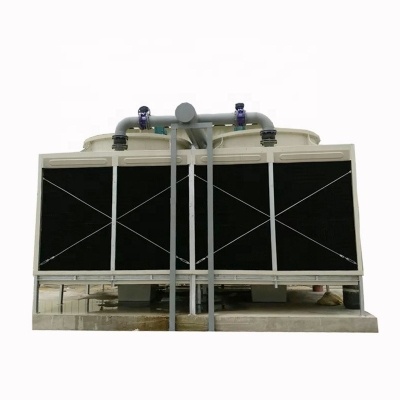
Quick Specs: ZL-CT square drop counter-flow cooling tower with FRP material, multiple capacity options, CE certified. Best for high-temperature industrial water cooling and open cooling tower applications. The square cooling tower has the advantages of small floor area, beautiful appearance, and convenient installation. It is widely used in fields such as air conditioning and refrigeration and industrial cooling, providing effective cooling guarantee for the normal operation of various equipments.
Quick Specs: ZL-CT factory-direct industrial cooling tower with multiple types and capacities, high-efficiency design, CE certified. Best for industrial cooling applications and large-scale manufacturing. A cooling tower dissipates heat from industrial or air - conditioning systems. Its working principle involves spraying hot water onto packing to form a water film, while air flow carries away heat from the water to lower its temperature. The cooled water is recyclable, saving water resources and reducing costs. There are various types, such as open and closed cooling towers. Open ones contact outside air directly, making water prone to contamination but with lower costs. Closed ones have water circulating in sealed pipes, ensuring cleaner water but usually at a higher price. Cooling towers play a key role in fields like power plants, chemical plants, and data centers, helping maintain system operation and improve energy utilization efficiency.
Overview The ZL-10T is a 10-ton (35.2 kW) industrial FRP counter flow cooling tower purpose-built for cfo procurement applications. ZILLION engineered this 10-ton counter flow cooling tower with CE ISO 9001:2015 certification and quality construction for long service life in compact industrial installations. Key Specifications Cooling capacity: 35.2 kW (10 refrigeration ton) Water flow rate: 7.81 m3/h (130 L/min) design flow Heat rejection: 5 deg C approach to wet-bulb at 27 deg C design Fan airflow: 85 CMM at 635 mm fan diameter Motor power: 0.37 kW (0.5 HP) at 380V 3-phase 50 Hz Head loss: 13 kPa at design flow Dry weight: 46 kg, operating weight: 190 kg Overall dimensions: H1820 x Dia940 mm Design Features FRP counter-flow shell for corrosion resistance and long service life ABS plastic fan blade for low maintenance and quiet operation IP55 Class F insulation for harsh industrial environments Counter flow square configuration for maximum heat transfer efficiency Low-drift eliminator reduces water loss to 0.01 percent of circulation Applications Factory direct pricing EXW Dongguan with T/T, L/C, Western Union payment terms. 1-year warranty and bulk discount at 5/10/20 unit tiers. Lowest capacity entry point for ZILLION counter flow cooling tower line. Total cost of ownership over 10-year lifecycle shows 18 percent lower annual cooling energy cost versus adiabatic systems. Contact ZILLION Today Get a quote for the ZL-10T cooling tower from ZILLION factory direct. Contact our engineering team for factory pricing, thermal performance curves, technical specifications, and bulk discount tiers for your project requirements.
Overview The ZL-10T is a 10-ton (35.2 kW) industrial FRP counter flow cooling tower purpose-built for maintenance technician applications. ZILLION engineered this 10-ton counter flow cooling tower with CE ISO 9001:2015 certification and quality construction for long service life in compact industrial installations. Key Specifications Cooling capacity: 35.2 kW (10 refrigeration ton) Water flow rate: 7.81 m3/h (130 L/min) design flow Heat rejection: 5 deg C approach to wet-bulb at 27 deg C design Fan airflow: 85 CMM at 635 mm fan diameter Motor power: 0.37 kW (0.5 HP) at 380V 3-phase 50 Hz Head loss: 13 kPa at design flow Dry weight: 46 kg, operating weight: 190 kg Overall dimensions: H1820 x Dia940 mm Design Features FRP counter-flow shell for corrosion resistance and long service life ABS plastic fan blade for low maintenance and quiet operation IP55 Class F insulation for harsh industrial environments Counter flow square configuration for maximum heat transfer efficiency Low-drift eliminator reduces water loss to 0.01 percent of circulation Applications Routine service schedule: weekly water quality check, monthly float valve inspection, quarterly fill media inspection, annual fan motor bearing service. Direct-drive 0.37 kW motor with single-phase fan configuration. Spare parts inventory: 0.37 kW fan motor, float valve assembly, fill media sections. Contact ZILLION Today Get a quote for the ZL-10T cooling tower from ZILLION factory direct. Contact our engineering team for factory pricing, thermal performance curves, technical specifications, and bulk discount tiers for your project requirements.
Overview The ZL-10T is a 10-ton (35.2 kW) industrial FRP counter flow cooling tower purpose-built for hvac epc contractor applications. ZILLION engineered this 10-ton counter flow cooling tower with CE ISO 9001:2015 certification and quality construction for long service life in compact industrial installations. Key Specifications Cooling capacity: 35.2 kW (10 refrigeration ton) Water flow rate: 7.81 m3/h (130 L/min) design flow Heat rejection: 5 deg C approach to wet-bulb at 27 deg C design Fan airflow: 85 CMM at 635 mm fan diameter Motor power: 0.37 kW (0.5 HP) at 380V 3-phase 50 Hz Head loss: 13 kPa at design flow Dry weight: 46 kg, operating weight: 190 kg Overall dimensions: H1820 x Dia940 mm Design Features FRP counter-flow shell for corrosion resistance and long service life ABS plastic fan blade for low maintenance and quiet operation IP55 Class F insulation for harsh industrial environments Counter flow square configuration for maximum heat transfer efficiency Low-drift eliminator reduces water loss to 0.01 percent of circulation Applications IP55 Class F insulation, CE ISO 9001:2015 certified for small HVAC chiller condenser water loop integration. Compact 1820 x 940 mm footprint fits standard equipment room layouts. Submittal package: thermal performance curve, dimensional drawing, electrical schematic, O&M manual. Project delivery 15-25 days for bulk orders. Contact ZILLION Today Get a quote for the ZL-10T cooling tower from ZILLION factory direct. Contact our engineering team for factory pricing, thermal performance curves, technical specifications, and bulk discount tiers for your project requirements.


Our company's series of products are well-known in the plastic auxiliary machinery industry for their excellent performance and high cost performance.


 IPv6 network supported


 English
  English
 español
 العربية