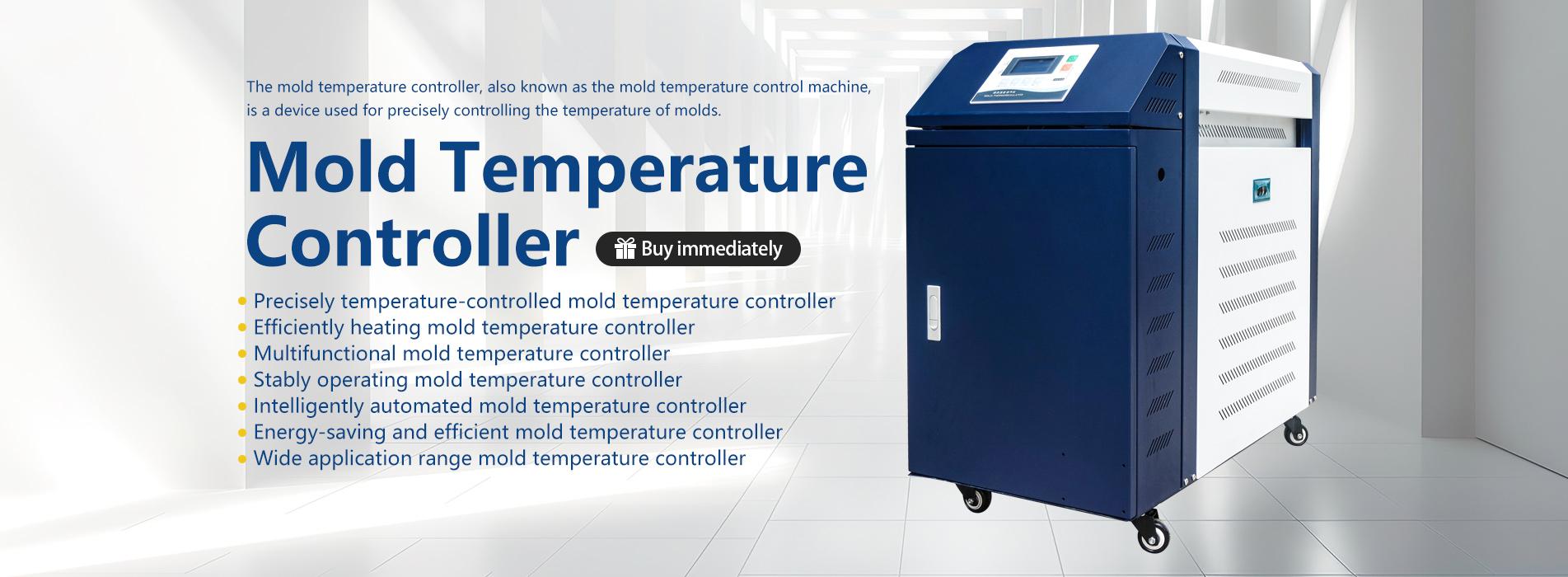
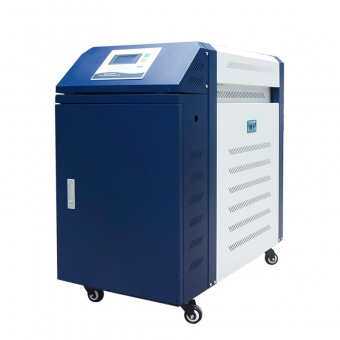
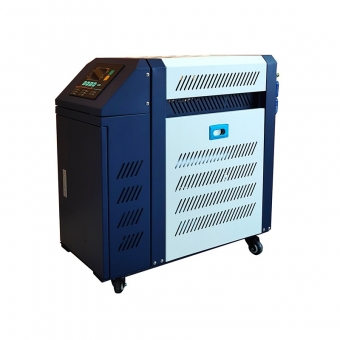
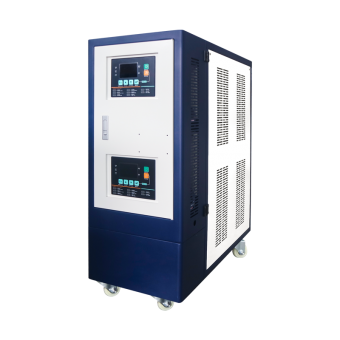
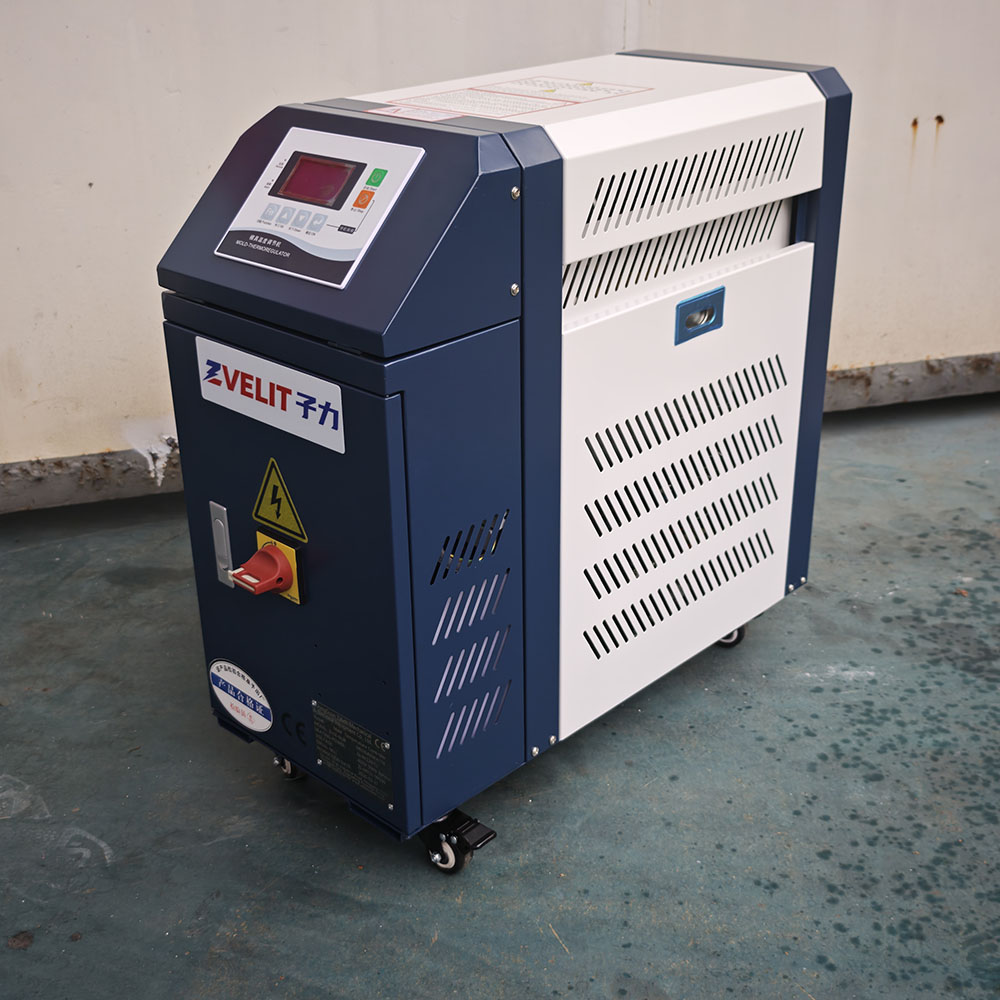
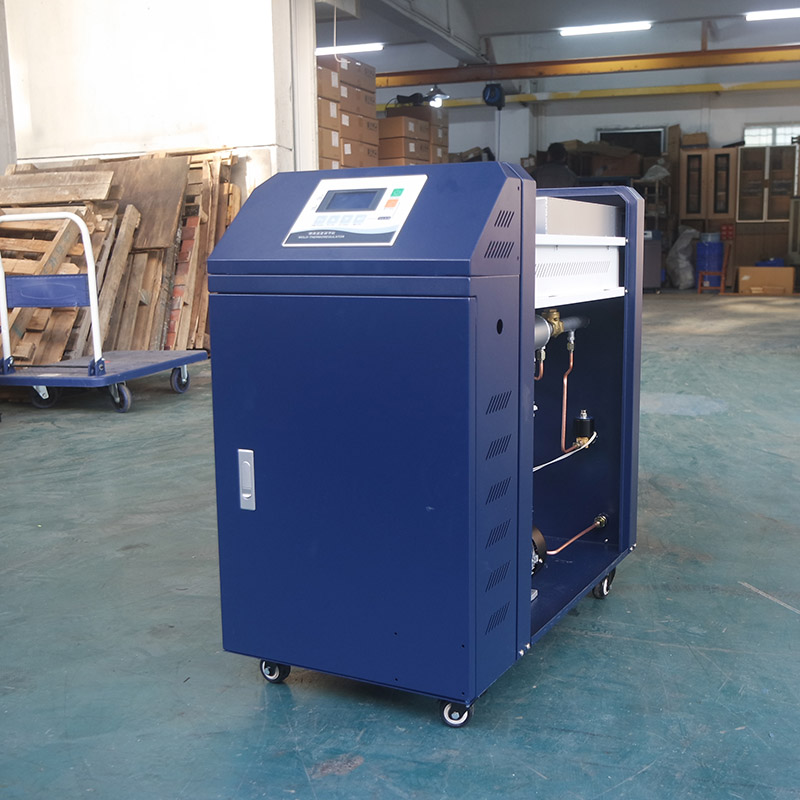
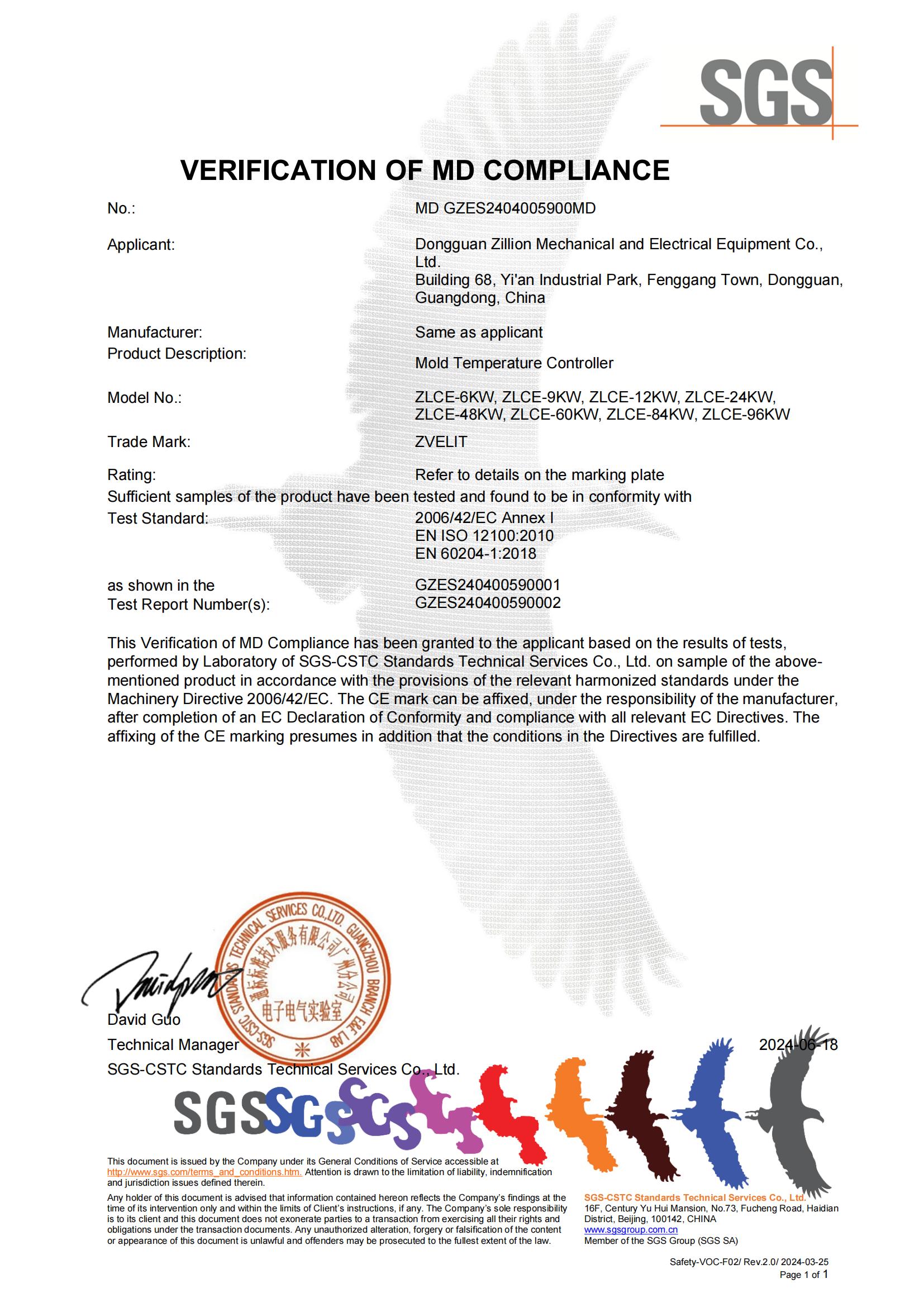
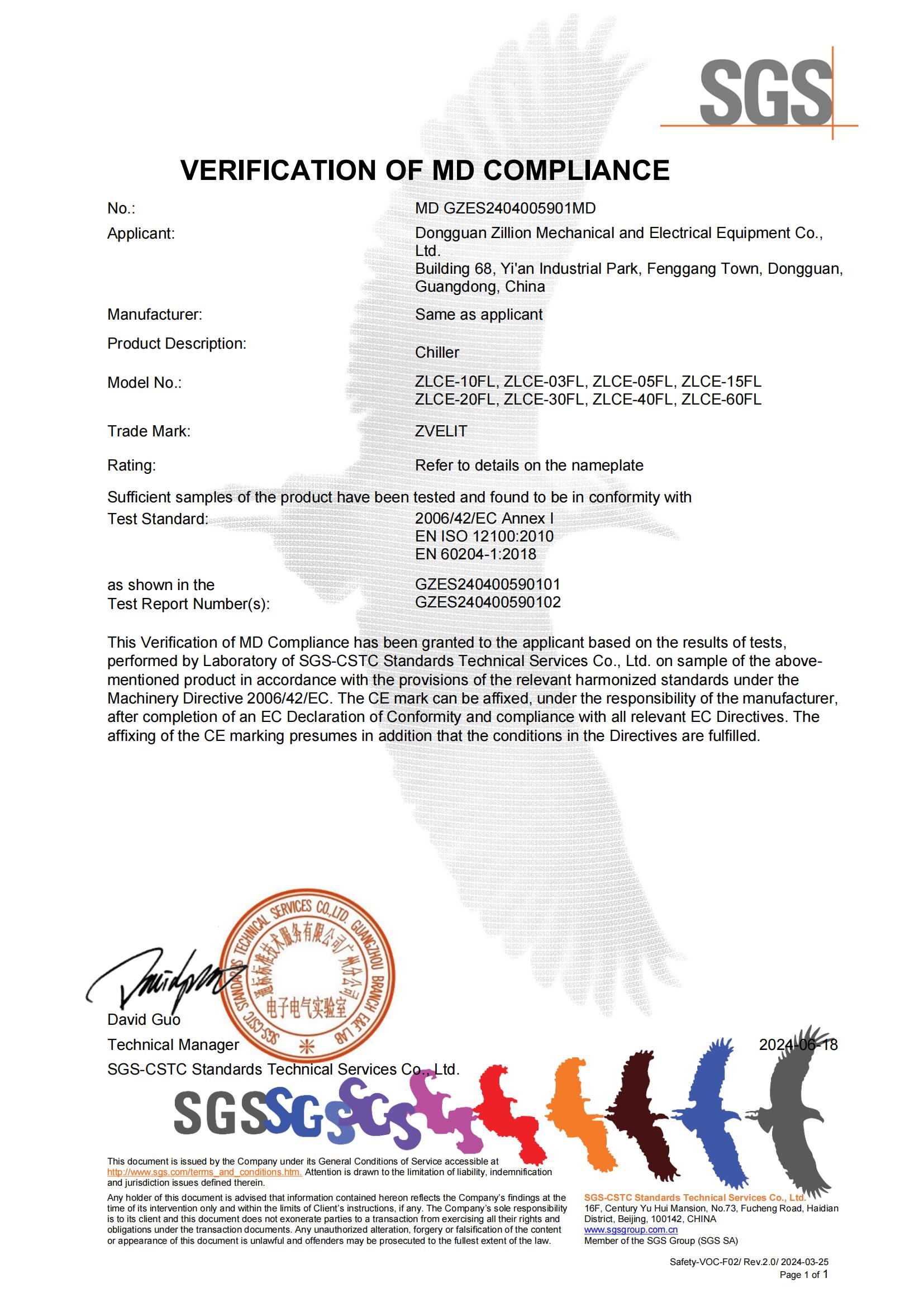
This mold temperature controller offers precise temperature control (±0.1℃), ensuring stable product quality for injection molding processes. It features easy operation with a digital display for real-time monitoring.


This mold temperature controller offers precise temperature control (±0.1℃), ensuring stable product quality for injection molding processes. It features easy operation with a digital display for real-time monitoring.
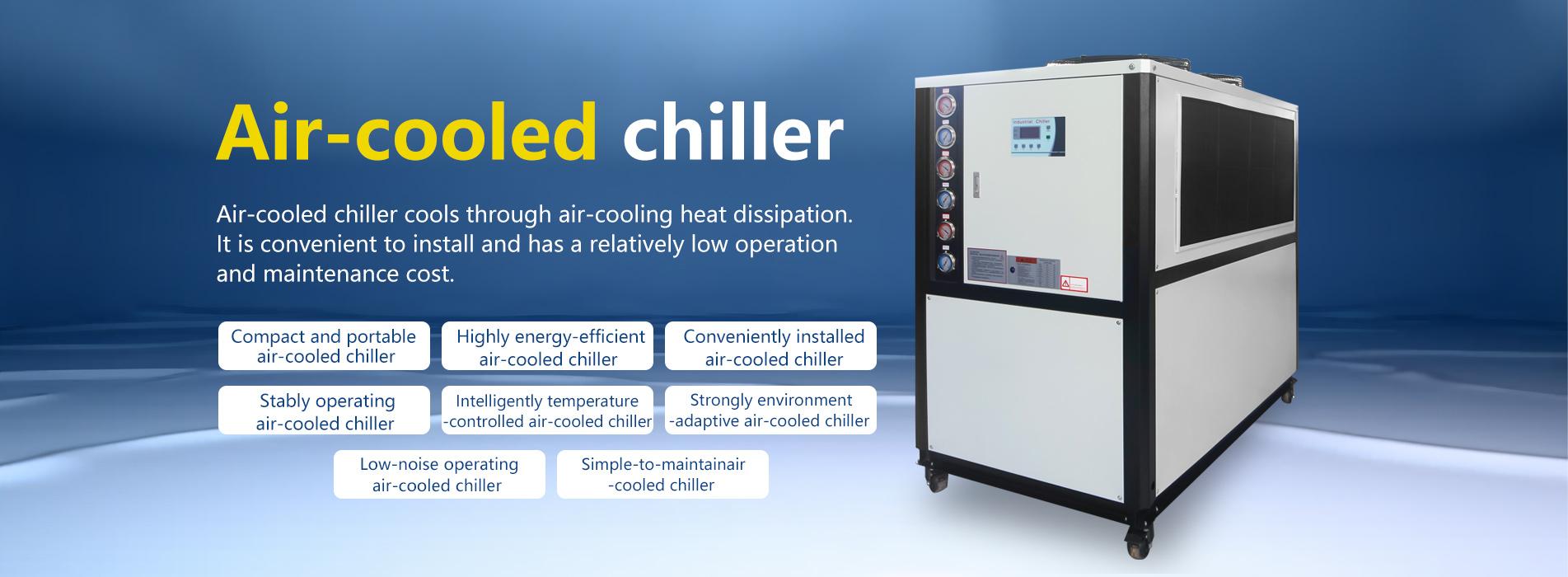
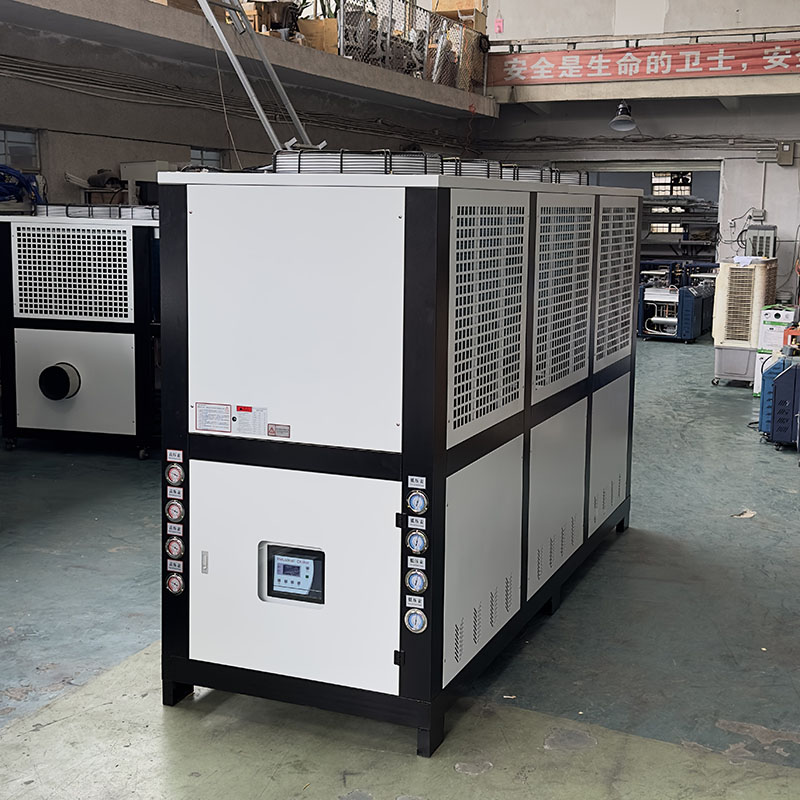
The 15HP air-cooled shell-and-tube chiller is an industrial-grade solution for high-load refrigeration, with a cooling capacity of 44.46LW. Its core is a high-efficiency shell-and-tube heat exchanger; with full tube-shell heat exchange, its efficiency is 15%-20% higher than ordinary exchangers, quickly meeting continuous cooling needs of large industrial workshops, commercial complex central air conditioners and high-load production lines. It features an enhanced air-cooled module with a large-diameter fan and optimized air duct, maintaining stable heat dissipation in high temperatures without a water-cooling system, greatly reducing site infrastructure costs. The shell-and-tube exchanger has strong pressure resistance and anti-scaling ability; paired with a built-in high-precision filter, it intercepts circulating water impurities, reducing blockage risks and extending equipment maintenance cycles.
The 5-HP air-cooled chiller -15℃ is a high-performance ultra-low temperature refrigeration equipment with 12500W cooling capacity. It stably outputs -15℃, suitable for medium/large low-temperature scenarios like frozen food processing, biomedical storage and industrial low-temperature assembly. Equipped with an enhanced air-cooled system, it maintains efficient heat dissipation under low-temperature conditions, no external water-cooling needed, and offers flexible installation for various sites. It has multiple safety protections (low-temperature overload, compressor overpressure) to avoid damage in extreme conditions. The built-in high-efficiency detachable filter intercepts impurities, preventing pipeline blockage and component freezing to extend service life. The intelligent temperature control system keeps fluctuation within ±0.5℃, balancing low-temperature accuracy and energy economy, making it an efficient and reliable refrigeration choice for low-temperature fields.
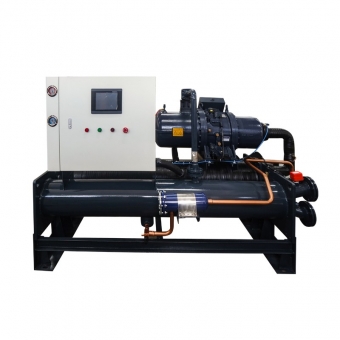
Targeting the cooling needs of commercial buildings, this energy-saving water-cooled screw chiller system is an ideal choice. It adopts intelligent frequency conversion control technology, which can automatically adjust the operating power according to changes in indoor and outdoor temperatures. While ensuring comfortable temperature and humidity in commercial spaces such as shopping malls and office buildings, it significantly reduces operating energy consumption. The compact modular design also facilitates flexible installation and layout in building machine rooms.
This high-efficiency water-cooled screw chiller is specifically designed for large-scale industrial cooling needs. Leveraging advanced screw compression technology, it can stably deliver strong refrigeration capacity under high-load conditions. Its optimized heat exchange system significantly improves heat transfer efficiency, effectively reducing energy consumption per unit of refrigeration. It provides continuous and stable low-temperature environment support for large-scale industrial production processes such as steel and chemical industries, helping enterprises achieve efficient production.
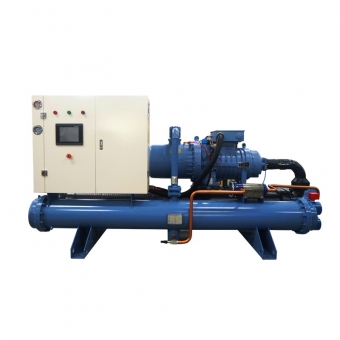
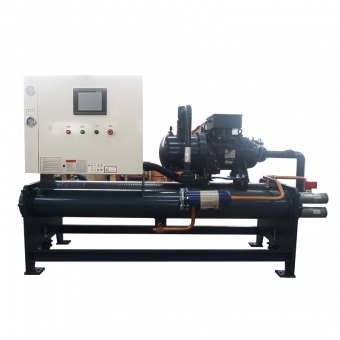
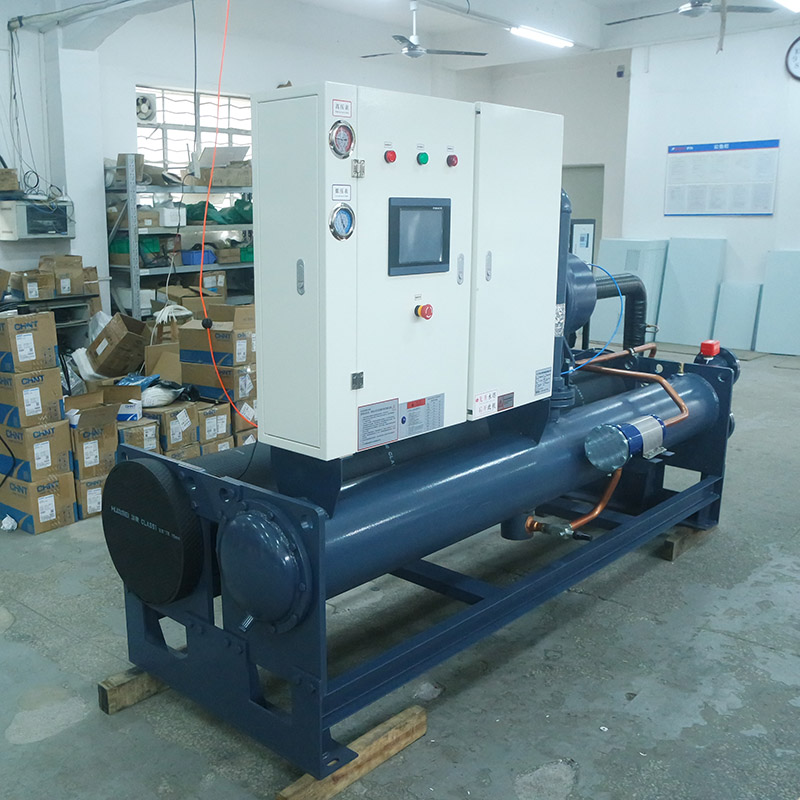
The water - cooled screw chiller is a high - performance refrigeration equipment designed to meet diverse industrial and commercial cooling needs. With advanced technology and reliable components, it ensures stable and efficient cooling operation.
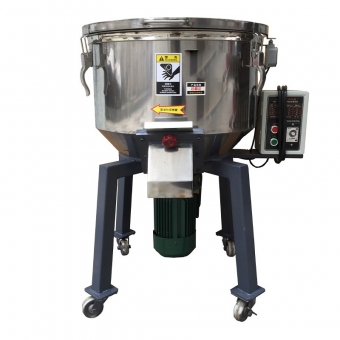
The vertical mixer machine is a space-saving industrial blending solution for diverse materials. Its high-torque motor and adjustable speed settings handle granular, powdery, or viscous pastes, ensuring uniform mixing. The sealed chamber prevents contamination and dust leakage, suitable for food, plastic processing, chemical, and building materials industries. Durable stainless steel construction ensures longevity, while user-friendly design simplifies operation, discharge, and maintenance. Ideal for small to medium production lines, it enhances product quality and efficiency across applications.
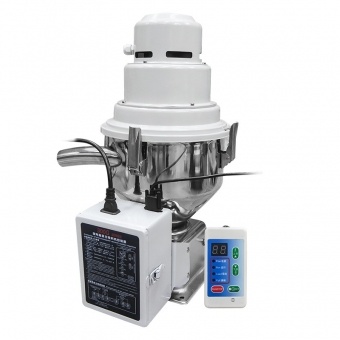
The vacuum hopper loader is an efficient automatic material conveying device, using vacuum suction technology to achieve dust-free transfer of granular, powdery or pellet materials. Equipped with intelligent control and material level sensors, it enables automatic start-stop and steady feeding, reducing manual labor. With hygienic closed-loop design, stainless steel or wear-resistant components, it ensures safe and durable operation. Suitable for plastic processing, food, pharmaceutical and chemical industries, it integrates easily into production lines for cost-effective and high-quality conveying.
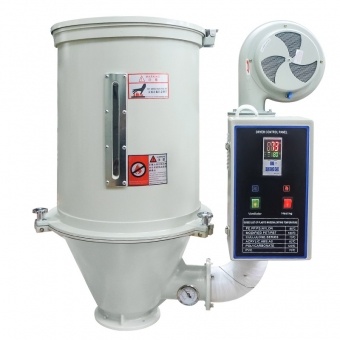
Industrial hopper dryers provide professional plastic material drying solutions with efficient heating systems and fans for uniform moisture removal, ensuring raw materials meet production standards; their safety-focused design includes reliable over-temperature protection to prevent operational risks, while compact structures with stable bases enable secure placement, manageable package sizes and weights simplify transport and installation, making them ideal for drying plastic pellets and granules in injection molding, extrusion, and other plastic processing scenarios, with industrial-grade performance on standard power to support stable production and high-quality end products.
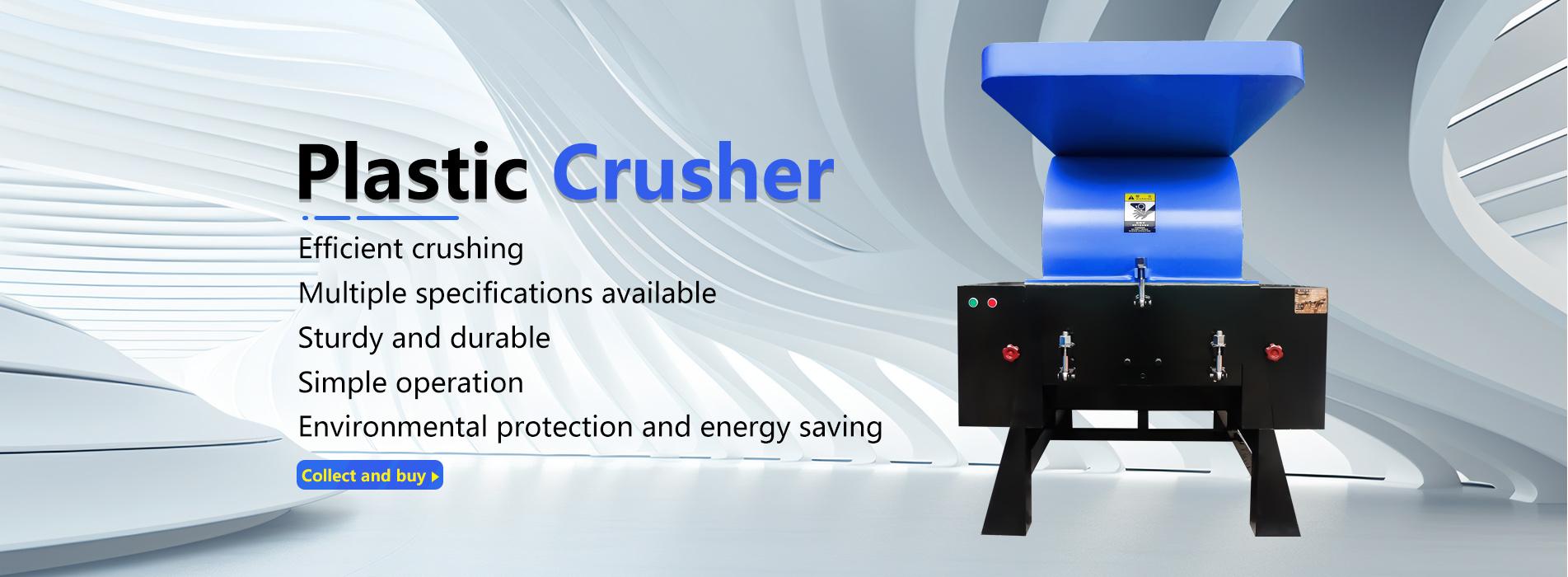
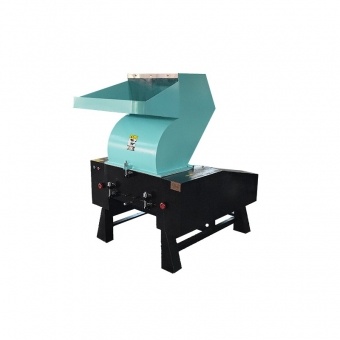
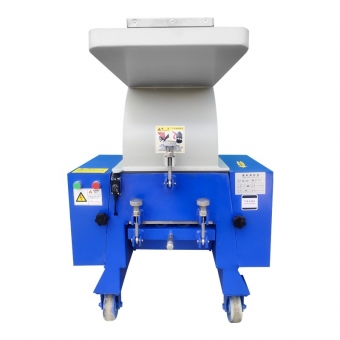
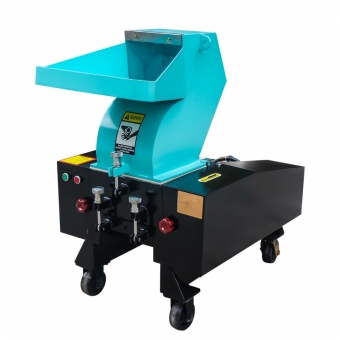
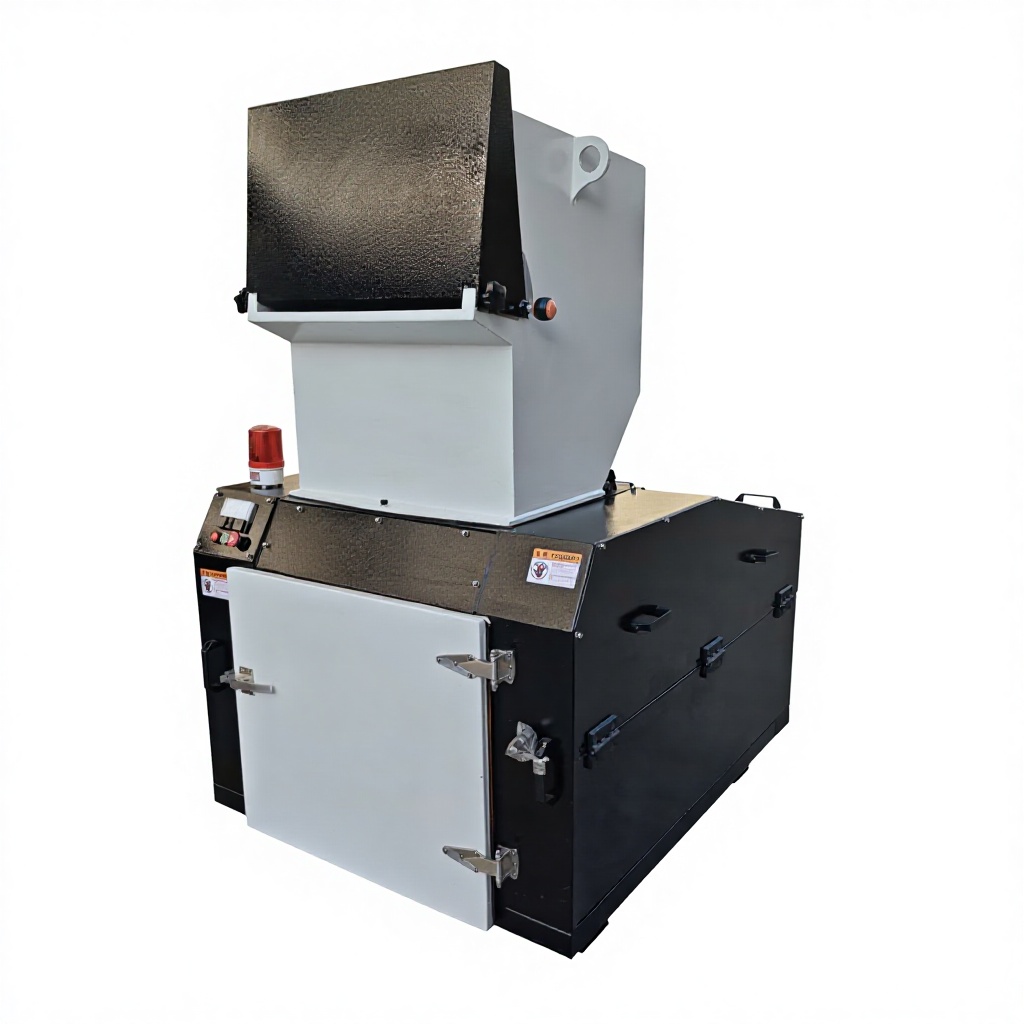
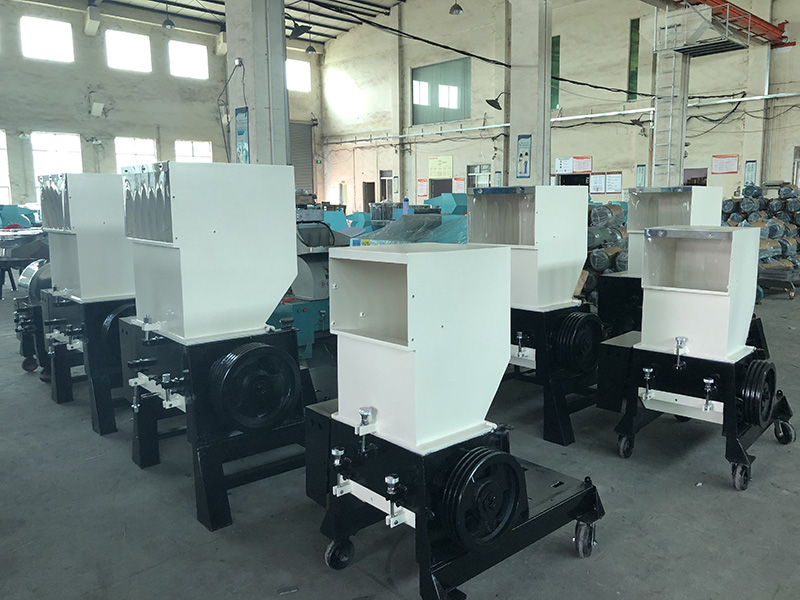
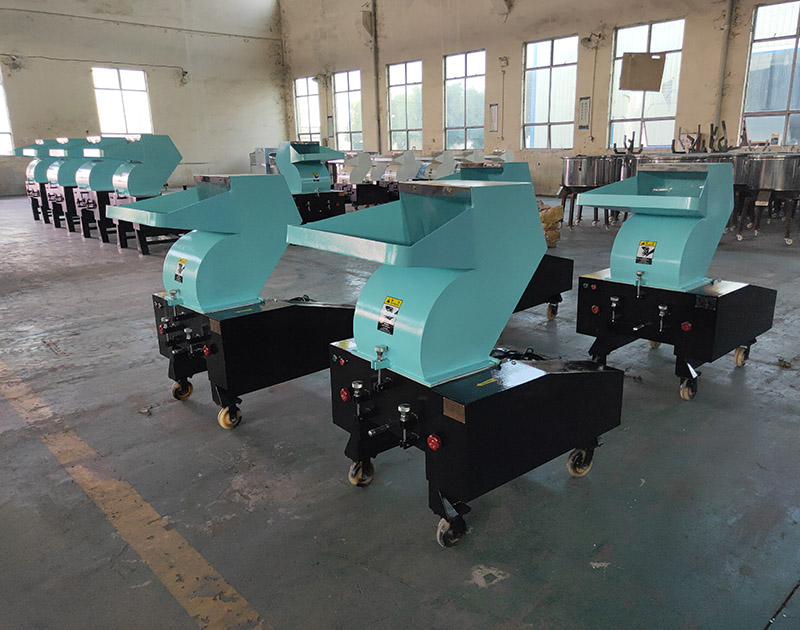
A plastic crusher machine is a device used to crush plastic into small pieces for easy disposal. The machine works by breaking down the plastic material into small pieces using a rotating blade. The crushed plastic can then be melted down and reused to make new products, thus reducing the amount of plastic waste in the environment. It is an essential machine in the plastic recycling process.
Plastic crushers specialize in breaking various plastic materials into plastic particles of different sizes. Crushed plastic can be recycled for use in the reproduction of plastic products, which is an important raw material for plastic recycling and pelletizing. It has the advantages of small space occupation, low power consumption, simple operation, and easy cleaning and maintenance. The particle size can be adjusted by replacing the screen.
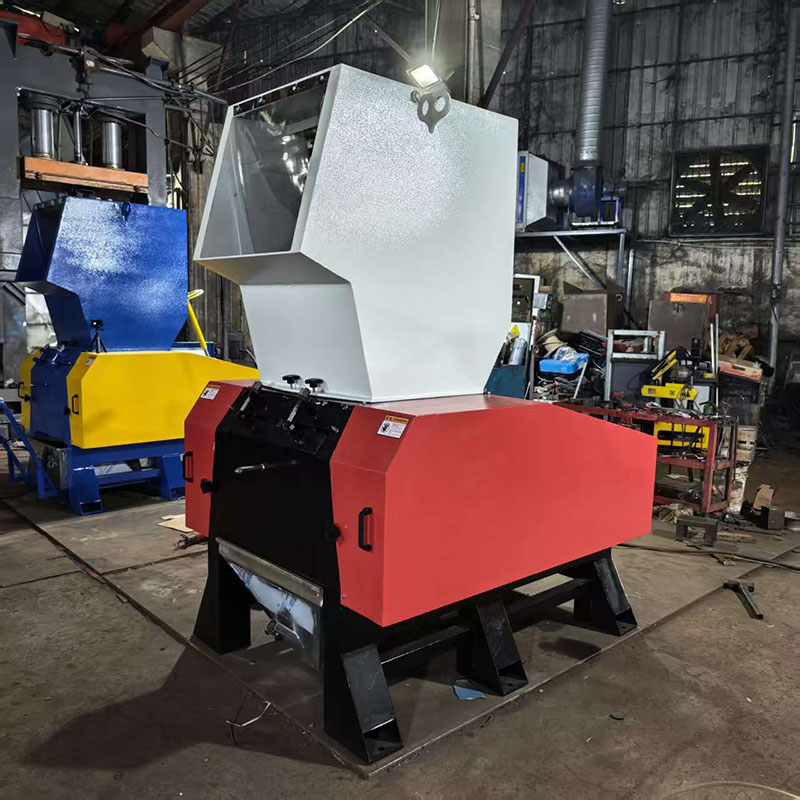
Plastic crusher, also known as plastic grinder, is mainly used to crush various plastic and rubber materials, such as plastic profiles, pipes, rods, filaments, films and waste rubber products. It is widely used in waste - plastic recycling and the recycling of factory waste. The motor power of the plastic crusher is between 3.5 and 150 kilowatts, and the knife - roller speed is generally between 150 and 500 rpm.
The 15HP air-cooled shell-and-tube chiller is an industrial-grade solution for high-load refrigeration, with a cooling capacity of 44.46LW. Its core is a high-efficiency shell-and-tube heat exchanger; with full tube-shell heat exchange, its efficiency is 15%-20% higher than ordinary exchangers, quickly meeting continuous cooling needs of large industrial workshops, commercial complex central air conditioners and high-load production lines. It features an enhanced air-cooled module with a large-diameter fan and optimized air duct, maintaining stable heat dissipation in high temperatures without a water-cooling system, greatly reducing site infrastructure costs. The shell-and-tube exchanger has strong pressure resistance and anti-scaling ability; paired with a built-in high-precision filter, it intercepts circulating water impurities, reducing blockage risks and extending equipment maintenance cycles.
The 5-HP air-cooled chiller -15℃ is a high-performance ultra-low temperature refrigeration equipment with 12500W cooling capacity. It stably outputs -15℃, suitable for medium/large low-temperature scenarios like frozen food processing, biomedical storage and industrial low-temperature assembly. Equipped with an enhanced air-cooled system, it maintains efficient heat dissipation under low-temperature conditions, no external water-cooling needed, and offers flexible installation for various sites. It has multiple safety protections (low-temperature overload, compressor overpressure) to avoid damage in extreme conditions. The built-in high-efficiency detachable filter intercepts impurities, preventing pipeline blockage and component freezing to extend service life. The intelligent temperature control system keeps fluctuation within ±0.5℃, balancing low-temperature accuracy and energy economy, making it an efficient and reliable refrigeration choice for low-temperature fields.
Targeting the cooling needs of commercial buildings, this energy-saving water-cooled screw chiller system is an ideal choice. It adopts intelligent frequency conversion control technology, which can automatically adjust the operating power according to changes in indoor and outdoor temperatures. While ensuring comfortable temperature and humidity in commercial spaces such as shopping malls and office buildings, it significantly reduces operating energy consumption. The compact modular design also facilitates flexible installation and layout in building machine rooms.
This high-efficiency water-cooled screw chiller is specifically designed for large-scale industrial cooling needs. Leveraging advanced screw compression technology, it can stably deliver strong refrigeration capacity under high-load conditions. Its optimized heat exchange system significantly improves heat transfer efficiency, effectively reducing energy consumption per unit of refrigeration. It provides continuous and stable low-temperature environment support for large-scale industrial production processes such as steel and chemical industries, helping enterprises achieve efficient production.
The water - cooled screw chiller is a high - performance refrigeration equipment designed to meet diverse industrial and commercial cooling needs. With advanced technology and reliable components, it ensures stable and efficient cooling operation.
Reliable water-cooled chiller with Chint Electric components and high-quality integrated circuit board, reducing faults. Supports remote control for convenient operation.
This mold temperature controller offers precise temperature control (±0.1℃), ensuring stable product quality for injection molding processes. It features easy operation with a digital display for real-time monitoring.
The mold temperature machine is mainly composed of a heating system, a cooling system, a circulating pump, and an intelligent control system. During operation, the circulating pump drives the heat transfer medium (water or heat transfer oil) to circulate between the equipment and the mold. When the mold temperature is lower than the set value, the heating system starts quickly, and the high-efficiency heating elements heat up rapidly; when the temperature is too high, the cooling system intervenes, and the excess heat is timely removed through a plate heat exchanger or direct cooling method, thereby achieving precise control of the mold temperature.
In injection molding workshops, the mold temperature machine is the key to improving the quality of plastic products. It ensures that the mold temperature is appropriate, allowing the plastic melt to uniformly fill the cavity and avoiding defects such as deformation and flow marks on the products. In the die casting industry, the mold temperature machine provides a stable high temperature for the mold, helping aluminum alloys, magnesium alloys and other castings to be accurately formed and improving surface finish. Whether it is rubber vulcanization or temperature maintenance of chemical reaction kettles, the mold temperature machine can play a significant role, meeting diverse industrial production needs.
As a core equipment in the field of industrial temperature control, the mold temperature machine integrates precise heating and efficient cooling functions. Through an intelligent temperature control system, it can stabilize the mold temperature at the set value with a temperature control accuracy of ±0.5℃ or even higher. This effectively ensures the constancy of mold temperature during production, significantly improves product quality and production efficiency, and is widely applicable to industries with strict temperature control requirements such as injection molding, die casting, and rubber.
The dual-temperature integrated mold temperature controller is an advanced temperature control device specially designed for heating and cooling molds. It can simultaneously provide two different temperature control modes to meet the precise requirements of mold temperature in different process stages.
This oil-type mold temperature controller uses high-quality heat transfer oil as the heat transfer medium, with excellent temperature control capability, achieving a temperature control accuracy of ±0.5℃, which can provide a stable temperature environment for various production processes. It has high heating efficiency, can quickly raise the mold temperature to the set value, greatly shortening the production preparation time. In industries such as injection molding and die casting, it can effectively improve production efficiency and ensure stable product quality.
A plastic crusher machine is a device used to crush plastic into small pieces for easy disposal. The machine works by breaking down the plastic material into small pieces using a rotating blade. The crushed plastic can then be melted down and reused to make new products, thus reducing the amount of plastic waste in the environment. It is an essential machine in the plastic recycling process.
Plastic crushers specialize in breaking various plastic materials into plastic particles of different sizes. Crushed plastic can be recycled for use in the reproduction of plastic products, which is an important raw material for plastic recycling and pelletizing. It has the advantages of small space occupation, low power consumption, simple operation, and easy cleaning and maintenance. The particle size can be adjusted by replacing the screen.
Plastic crusher, also known as plastic grinder, is mainly used to crush various plastic and rubber materials, such as plastic profiles, pipes, rods, filaments, films and waste rubber products. It is widely used in waste - plastic recycling and the recycling of factory waste. The motor power of the plastic crusher is between 3.5 and 150 kilowatts, and the knife - roller speed is generally between 150 and 500 rpm.
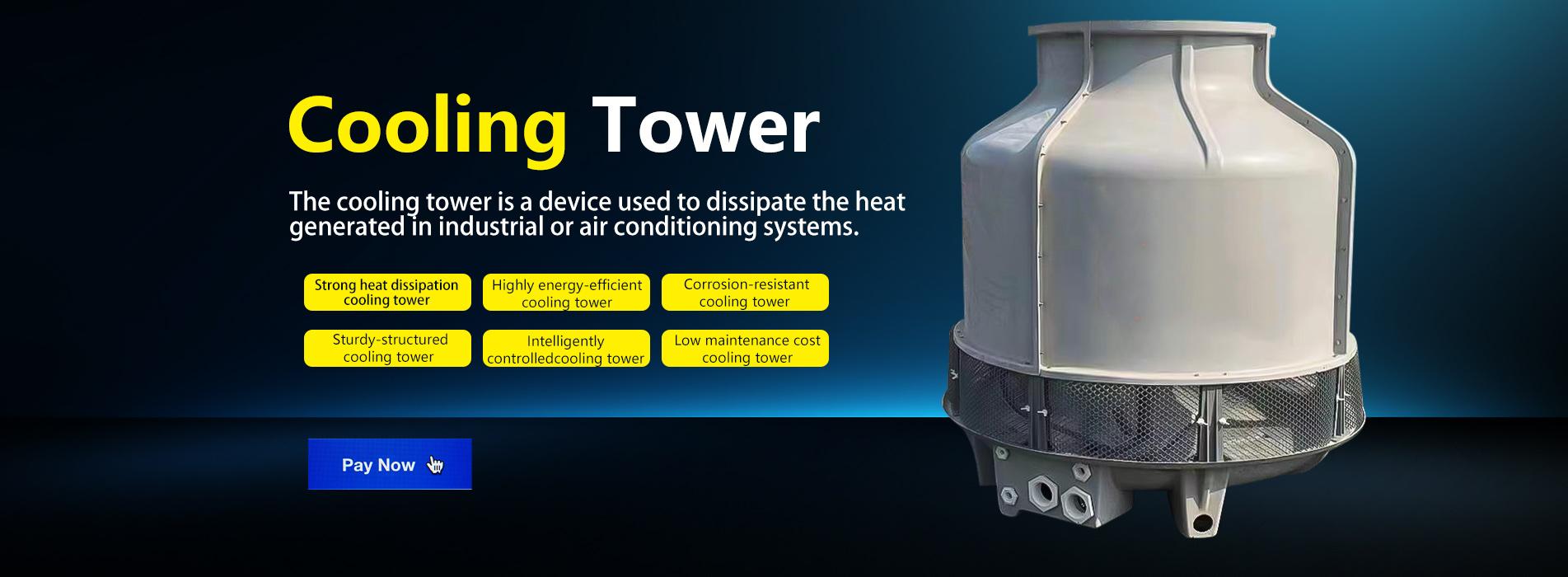
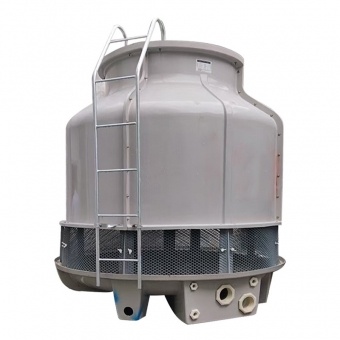
A cooling tower dissipates heat from industrial or air - conditioning systems. Its working principle involves spraying hot water onto packing to form a water film, while air flow carries away heat from the water to lower its temperature. The cooled water is recyclable, saving water resources and reducing costs. There are various types, such as open and closed cooling towers. Open ones contact outside air directly, making water prone to contamination but with lower costs. Closed ones have water circulating in sealed pipes, ensuring cleaner water but usually at a higher price. Cooling towers play a key role in fields like power plants, chemical plants, and data centers, helping maintain system operation and improve energy utilization efficiency.
The counterflow cooling tower is a common type of cooling tower. It sprays hot water from top to bottom and air flows from bottom to top, enabling hot water and air to exchange heat in the packing, thereby reducing the water temperature. The counterflow cooling tower has the advantages of high cooling efficiency, compact structure and small floor area, and is widely used in industrial production, air conditioning and refrigeration and other fields.
The vertical mixer machine is a space-saving industrial blending solution for diverse materials. Its high-torque motor and adjustable speed settings handle granular, powdery, or viscous pastes, ensuring uniform mixing. The sealed chamber prevents contamination and dust leakage, suitable for food, plastic processing, chemical, and building materials industries. Durable stainless steel construction ensures longevity, while user-friendly design simplifies operation, discharge, and maintenance. Ideal for small to medium production lines, it enhances product quality and efficiency across applications.
The plastic mixer is a kind of equipment used for mixing plastic particles, powders and other materials. Through a specific stirring method, it evenly mixes plastic materials of different types, colors or compositions to meet various needs in the plastic processing process. This equipment is widely used in fields such as plastic product production, plastic modification, and plastic recycling.
:+8618520532504


25 years of focus on innovation, R&D and production of industrial temperature control equipment.

We adopt advanced technology, use branded components, control every process of production, and each machine is shipped after passing professional testing.

The design team, composed of engineers with many years of experience in the temperature control industry, is committed to solving engineering problems for customers one-on-one, perfect matching, and providing reasonable and practical temperature control solutions.

Free technical service, solution design, installation guidance, nationwide warranty.

The plastic crusher is widely used in the plastic recycling industry. It can crush various waste plastic products, such as plastic bottles, plastic films, plastic pipes, etc., into small particles for reprocessing and utilization. This not only reduces the environmental pollution caused by waste plastics but also realizes the recycling of resources.

Cooling tower is a heat dissipation device. It sprays hot water on the packing and exchanges heat with air to reduce the water temperature. Widely used in industrial fields such as chemical industry and power generation, it provides guarantee for equipment cooling.

Mold temperature controller precisely controls the mold temperature to optimize the production process. There are water temperature and oil temperature types.

An industrial chiller is cooling equipment composed of compressor, condenser, expansion valve, and evaporator. It provides constant temperature, flow, and pressure. With large refrigeration capacity and high efficiency, it can offer cooling water in a temperature range of -5°C to 35°C.
An industrial chiller is one of the most operationally critical pieces of equipment in any facility that depends on precision temperature control. When a chiller fails, process temperatures drift, quality suffers, and production slows. This guide covers the most common industrial chiller problems and their solutions. Understanding How Chillers Work: A chiller uses a refrigerant that cycles between four states: Compression (low-pressure gas compressed to high-pressure), Condensation (hot gas condenses to liquid in the condenser), Expansion (high-pressure liquid drops in temperature), Evaporation (cold refrigerant absorbs heat from process water). Problems in any stage affect cooling capacity. Problem 1: Chiller Fails to Start / No Power: Check main breaker and any branch circuit breakers. Verify power supply voltage at the connection terminal. If voltage is present but the unit is dead, internal fuse or control board is likely at fault. Problem 2: Insufficient Cooling Capacity: Process water temperature higher than setpoint. Common causes: refrigerant charge is low (leak), evaporator coils frosted, condenser coils dirty, scaling in process cooling lines. Check refrigerant pressure gauges and inspect condenser coils for debris. Problem 3: High Discharge Pressure: High-pressure alarm, chiller may cycle on and off on high pressure protection. Common causes: dirty or restricted condenser coils, inadequate cooling water flow, refrigerant overcharge, failed condenser fan motor. Problem 4: Low Discharge Pressure: Chiller runs continuously but cannot reach temperature setpoint. Common causes: insufficient refrigerant charge (leak), restricted refrigerant flow (blocked filter drier), failed expansion valve. Problem 5: Compressor Short Cycles: Compressor cycles on and off rapidly. Common causes: refrigerant overcharge, failed or stuck expansion valve, faulty compressor overload protector. Problem 6: Excessive Vibration or Noise: Unusual sounds from the compressor or fan area. Common causes: failed compressor mount isolation, loose fan blades, compressor internal failure. Internal compressor problems require immediate shutdown and service. Problem 7: Process Water Temperature Too High: Water leaving the chiller above setpoint. Common causes: chiller capacity insufficient for the load, hot refrigerant gas by-passing the evaporator, low refrigerant charge, evaporator pump failure. Problem 8: Water Pump Not Circulating: Low flow alarm, pump running but no pressure. Common causes: airlock in the pump or suction line, blocked strainer, failed pump seal, pump motor failure, closed isolation valve. Problem 9: Chiller Freezes Up: Frost or ice buildup on the evaporator coils. Common causes: low refrigerant charge, faulty defrost cycle, failed airside temperature sensor causing overcooling. Problem 10: Error Codes: Digital display shows error code. "HP" = high pressure, "LP" = low pressure, "FLO" = flow fault, "E-01" = sensor fault. Consult the manufacturer manual for...
read more+Inside every laser cutting and welding machine, the most precise manufacturing technology in widespread use depends fundamentally on water cooling. The laser resonator, optics, and fiber delivery systems all generate significant heat that must be removed precisely and continuously for the laser to maintain power stability and beam quality. A laser chiller is not a luxury accessory — it is a core component of the laser system. Why Laser Equipment Needs Cooling Laser source (resonator): The heart of the laser generates significant waste heat. In fiber lasers and CO2 lasers, the efficiency of converting electrical input to laser light is typically 30-40% — the rest becomes heat that must be removed. Even small temperature changes in the resonator affect the laser wavelength and power output. Laser optics: Without cooling, thermal lensing occurs — optics change focal length as they heat, degrading cutting and welding precision. Fiber delivery system: Fiber optic cables can overheat if the coupling optics are not properly cooled. How a Laser Chiller Works Refrigeration system: Compressor, condenser, evaporator, and expansion valve — the same basic refrigeration cycle used in air conditioning. Circulating pump: Moves chilled water through the laser system cooling circuits at a controlled pressure and flow rate. Temperature controller: Maintains the chilled water at a precise setpoint (typically 20-25C). Temperature stability of +/- 1C or better is critical for laser power stability. Water reservoir: Provides a buffer volume to absorb thermal surges during intensive cutting/welding operations. Cooling Capacity: How to Size a Laser Chiller Sizing a laser chiller is not guesswork — laser equipment manufacturers specify the maximum heat load that must be removed. 500W fiber laser: approximately 1.5-2.5 kW cooling required. 1,000W fiber laser: approximately 3-5 kW cooling required. 2,000W fiber laser: approximately 6-10 kW cooling required. 4,000W fiber laser: approximately 12-18 kW cooling required. An undersized chiller cannot remove heat fast enough. An oversized chiller cycles on and off more frequently, reducing compressor life and causing temperature instabilities. Air-Cooled vs Water-Cooled: Air-cooled uses a fan to blow air across condenser coils — simpler installation, suitable for environments where ambient temperature is moderate (under 35C). Water-cooled uses a secondary water supply (cooling tower or city water) — more efficient in high-ambient-temperature environments, lower operating noise, but requires additional infrastructure. Why Tap Water Is Not Acceptable: Scale formation from calcium and magnesium deposits reducing cooling efficiency. Corrosion of aluminum and copper cooling channels from dissolved oxygen and minerals. Algae and biofilm clogging filters and reducing flow. No temperature precision — a water loop without refrigeration cannot maintain the +/- 1C stability required. A laser c...
read more+In the industrial production field, stable and precise temperature control is the key to ensuring product quality, and the water-type mold temperature machine has become an indispensable auxiliary equipment for various manufacturing industries. Our 6KW water-type mold temperature machine, with SGS-CE certification, fully complies with international quality standards, ensuring safe and stable operation in various production scenarios. Different from standard equipment, we focus on customization services to meet the diverse needs of different enterprises. Whether it is adjusting the temperature control range, optimizing the equipment structure, or adapting to different voltage standards, we can tailor the solution according to your actual production needs. The machine is designed to work stably at 120℃, which can perfectly match the temperature requirements of injection molding, die casting, rubber processing and other processes. ----------------------------- With ±0.1℃ precise temperature control, it avoids the quality problems caused by temperature deviation, effectively improving production efficiency and product qualification rate. The SGS-CE certification ensures that the equipment meets international safety and environmental protection standards, which can be smoothly used in global industrial sites and avoid compliance risks. Simple operation, reliable performance and customizable design make our water-type mold temperature machine an ideal choice for your industrial production. We are committed to providing professional customization services to solve your temperature control pain points and escort your production efficiency. ----------------------------- CONTACT US Address: No. 2 (103B), Yian Industrial Zone, Fenggang Town, Dongguan City, Guangdong Province, China. Leika Li Tel / WhatsApp: +86 185 2053 2504Email: leika@gdzillion.cn Hendrix Lee Tel / WhatsApp: +86 156 0223 2700Email: hendrix@gdzillion.cn
read more+In the plastic processing and recycling industry, excessive noise, strict environmental regulations, and production efficiency have long been major challenges for enterprises. Traditional crushers often produce noise over 90 decibels, which not only harms workers’ health but also puts factories at risk of environmental rectification. Our low-noise plastic crusher focuses on silent and efficient performance, integrating advanced crushing technology with eco-friendly design. It provides a one-stop solution for plastic recycling, suitable for recycling scraps in injection molding workshops, large-scale processing in recycling centers, and crushing plastic parts from electronics, automobiles, and other fields. ----------------------------- Core Advantage: Ultra-Low Noise, Quiet Operation We adopt a full-chain noise reduction system to minimize noise from the source: Optimized structure with high-precision balanced cutter shaft and integrated cutter box, greatly reducing vibration Double-layer soundproof cover and shock-absorbing base to block noise transmission Stable low-speed high-torque transmission for smoother operation Tested by third-party authorities, the idling noise is as low as 52 decibels, and the working noise is controlled between 55–65 decibels, far lower than the national industrial noise standard. Workers can communicate normally without ear protectors, creating a healthier workshop environment. ----------------------------- High Efficiency & Strong Adaptability Silent operation does not mean reduced efficiency. Our crusher delivers powerful performance: Equipped with SKD-11 high-hardness alloy blades, which are wear-resistant and durable, easily crushing ABS, PC, PP, POM, PE films, plastic trays and other materials Variable frequency motor that automatically adjusts speed, saving 12%–18% energy compared with traditional models Intelligent overload protection, automatically stopping when metal impurities are detected to protect the machine The fully sealed structure and dust removal system effectively control dust emissions, meeting international environmental standards such as CE and RoHS, making it ideal for export to Europe, America and other markets. Wide Application Scenarios This crusher is widely used in various industries: Injection molding workshops: Real-time crushing and material recycling, reducing waste and labor costs Plastic recycling bases: Large-scale processing with low noise, complying with environmental requirements Electronic waste recycling: Precise crushing of small and precision plastic parts Automobile parts recycling: Capable of crushing high-strength plastics such as battery shells Medical plastic waste treatment: Sealed and low-vibration, avoiding secondary pollution Easy Maintenance & Reliable Service We prioritize convenient operation and after-sales support: User-friendly design fo...
read more+Sprue Specialized Shredder: Dedicated for Injection Molding Hard Scrap Recycling Machine Description This is a specialized shredding device tailored for hard material processing: 1.1 Adopts high-hardness SKD-11 blades, configured with 18 moving blades + 2 fixed blades; features strong cutting force and wear resistance, stably satisfies hard material shredding needs 1.2 Equipped with 22KW (30HP) high-power motor, maintains stable output speed of 480r/min; efficiently shreds injection molding hard blocks, avoids jamming and incomplete shredding 1.3 Hopper inlet size reaches 340410mm, accommodates large-volume injection molding sprues; machine weight is about 1000kg, ensures stable operation 1.4 Overall dimensions are 17501840*1950mm, fits layout of most injection molding workshops; supports 380V industrial voltage (50HZ), complies with standard factory electrical specifications, enables quick production startup after connection ----------------------------- Core Applications 2.1 Designed for injection molding production scenarios, targets hard wastes including sprues, solidified hard material blocks and production scraps, realizes fast and uniform shredding 2.2 Shredded materials can directly enter pelletizing process and be reused in injection molding production; helps enterprises achieve raw material recycling, reduce waste and cut production material costs ----------------------------- CONTACT US Address: No. 2 (103B), Yian Industrial Zone, Fenggang Town, Dongguan City, Guangdong Province, China. Leika Li Tel / WhatsApp: +86 185 2053 2504Email: leika@gdzillion.cn Hendrix Lee Tel / WhatsApp: +86 156 0223 2700Email: hendrix@gdzillion.cn
read more+A Compliant Choice for Food Production Cooling: 4 Core Advantages of 50 HP Air-Cooled Chillers In food production processes, temperature control is directly related to product safety, quality stability, and production compliance. Excessively high or fluctuating temperatures can easily lead to food spoilage, microbial growth, and may also affect the compliance of production processes. With targeted design and performance, 50 HP air-cooled chillers have become the preferred cooling equipment for food production workshops and warehouses. Their core advantages directly address industry pain points, building a solid temperature defense line for production links. Precise Temperature Control, Meeting Strict Food Production Standards Food processing, fresh-keeping and other links have extremely high requirements for temperature accuracy. Most scenarios need to maintain a constant range of 0-25℃. Equipped with a high-precision temperature control system, 50 HP air-cooled chillers can control temperature fluctuation within ±1℃, effectively avoiding product spoilage, poor taste and other problems caused by temperature imbalance. At the same time, the equipment supports on-demand adjustment of wind speed and cooling intensity, adapting to the cooling needs of different food production scenarios such as baking, refrigeration, and cooked food processing. Energy-Efficient and High-Performance, Reducing Production and Operation Costs Food production is often accompanied by 24/7 continuous operation, and the energy consumption of cooling equipment directly affects enterprise operating costs. 50 HP air-cooled chillers adopt high-efficiency compressors and optimized air duct design, with cooling efficiency 15%-20% higher than traditional equipment. They can save a lot of power consumption under the same cooling effect. Their intelligent start-stop function can also automatically adjust the operating state according to the workshop temperature, avoiding invalid energy consumption. Long-term use can significantly reduce production costs for enterprises and improve profit margins. ----------------------------- Safe and Compliant, Adapting to Hygiene Requirements of the Food Industry The food production industry has strict regulations on equipment hygiene and safety. 50 HP air-cooled chillers use food-grade environmentally friendly refrigerants, which are non-toxic, odorless, and non-polluting to food materials, complying with national food safety standards. The equipment body is made of corrosion-resistant and easy-to-clean 304 stainless steel, with a smooth surface without dead corners, which can effectively avoid bacterial growth and facilitate daily cleaning and disinfection. It meets the hygiene management requirements of food production workshops and helps enterprises pass compliance audits. Stable and Durable, Ensuring Uninterrupted Continuous Production The food production process is continuous, and the stability of cooling equipment directly affects pro...
read more+In manufacturing industries such as injection molding, die casting, and extrusion, mold temperature controllers, as core equipment for controlling mold temperature, typically account for 15%-30% of the total production energy consumption. With the continuous rise in energy costs, energy-saving transformation of mold temperature controllers has become an important breakthrough for enterprises to reduce costs and increase efficiency. This article will share 3 practical and verified energy-saving transformation schemes for mold temperature controllers, helping enterprises significantly reduce energy consumption while ensuring production quality. Scheme 1: Replace with High-Efficiency Heating Elements to Reduce Heat Loss Traditional mold temperature controllers mostly use ordinary metal heating tubes, with a heat conversion efficiency of only 70%-80%, and a large amount of heat is lost through the shell during the heating process. The first step in energy-saving transformation is to replace the heating elements with ceramic heating tubes or electromagnetic heating coils. The heat conversion efficiency of ceramic heating tubes can reach more than 90%, and they have the characteristics of fast heating speed and small thermal inertia; electromagnetic heating makes the metal barrel heat itself through electromagnetic induction, avoiding heat conduction loss, and the thermal efficiency can even reach 95%. At the same time, adding high-temperature resistant insulation cotton to insulate the heating chamber and pipelines of the mold temperature controller can further reduce heat loss. After replacing ceramic heating tubes and adding insulation transformation, an injection molding enterprise reduced the daily power consumption of a single mold temperature controller from 80 kWh to 55 kWh, saving 750 kWh of electricity per month, with a significant energy-saving effect. --------------占位--------------- Scheme 2: Install Waste Heat Recovery System for Secondary Utilization of Waste Heat During the cooling cycle of the mold temperature controller, a large amount of high-temperature waste heat is generated (such as high-temperature oil after cooling of oil temperature machines and hot water discharged by water temperature machines). If this waste heat is directly discharged, it not only wastes energy but also increases the cooling load of the workshop. Installing a waste heat recovery heat exchanger is an effective way to solve this problem. Specifically, a plate heat exchanger can be connected in series in the cooling circuit of the mold temperature controller to transfer the waste heat to the cold water in the cold water tank. The preheated cold water then enters the heating chamber of the mold temperature controller, reducing energy consumption during the heating stage; in addition, the recovered waste heat can also be used for workshop heating, preheating of employees' domestic water and other scenarios. After installing a waste heat reco...
read more+Many plastic recycling operations handle diverse material streams—from rigid thick plates and injection molding sprues to flexible films and thin sheets. While no single shredder is "one-size-fits-all," strategic configurations can transform an industrial plastic shredder into a multifunctional tool capable of processing multiple material types efficiently. The key lies in adjusting core components to match the physical properties of each material. For thick plastic plates (e.g., PC sheets, HDPE plates) and large rigid parts, the priority is high torque and durable blades. Configure the shredder with thick, carbide-tipped blades (hardness ≥HRC60) to withstand the impact of dense materials. Increase the knife shaft speed moderately (20-30 RPM) to ensure effective shearing, and select a larger feed opening (≥400mm×500mm) to accommodate bulky plates. Additionally, equip the machine with a reinforced hopper to prevent deformation under the weight of heavy materials. This setup allows the shredder to process thick plates up to 50mm without jamming or blade damage. ----------------------------- Flexible materials like PE films and PVC hoses pose a risk of wrapping around the knife shaft. To address this, install anti-winding blades with serrated edges, which grip and cut films without allowing them to tangle . Reduce the knife shaft speed (15-20 RPM) to minimize centrifugal force that pulls films around the shaft, and add a tensioning device in the feed hopper to flatten and feed films evenly. Some advanced models also feature a "film compactor" attachment that pre-presses films into dense bundles before shredding, further improving efficiency. Injection molding sprues and small plastic parts require precise particle size control for downstream recycling. For this, use a medium-hardness blade (HRC55-58) and a fine-mesh screen (3-5mm) to ensure uniform granules. Adjust the blade gap to 0.1-0.2mm for clean cuts, and equip the shredder with a vibration feeder to regulate the feed rate—this prevents overloading and ensures consistent particle output. Adding a dust collection system is also beneficial, as sprue processing can generate fine plastic dust that affects workshop air quality. ----------------------------- To maximize multifunctionality, choose a shredder with modular components that can be easily swapped. For example, a model with interchangeable blade sets, adjustable screen meshes, and optional feed attachments (like vibratory feeders or film compactors) allows quick reconfiguration between materials. Regular maintenance—such as blade sharpening every 200-300 hours and screen cleaning—also ensures consistent performance across different material types. By tailoring configurations to each material’s needs, an industrial plastic shredder can effectively handle thick plates, films, sprues, and more, reducing the need for multiple specialized machines.
read more+


Our company's series of products are well-known in the plastic auxiliary machinery industry for their excellent performance and high cost performance.
IPv6 network supported